

-SEB%20CREDIT%20VanuatuPocketGuide.com.webp?v=2026-03-20T20%3A05%3A36.070Z)
A Guide to Ferry Transport in Vanuatu
Vanuatu is a nation comprising 83 islands, with around 65 of them inhabited. Needless to say, there's plenty of opportunity to do some island-hopping.
Taking an interisland ferry is the cheapest way to get between Vanuatu's main islands like Efate (home to the capital, Port Vila) and Espiritu Santo, as well as reaching the outer islands like Tanna, Pentecost and Malekula, unless you have your own yacht.
This Vanuatu ferry guide covers the journey between the main islands and remote outer islands, as well as boat transport options throughout the archipelago. What's more, we'll even throw in some handy advice on taking boat transfers between the smaller atolls, such as island resorts.
This article is based on real on-the-ground research, not on AI scraping old content from the internet. Learn how we use AI!
Table of Contents
5 Tips for Taking the Ferry in Vanuatu
- Check ferry schedules close to your travel date, as departures can change due to weather, cargo needs or operational issues.
- Arrive early at the wharf to secure a better seat or sleeping spot, especially on overnight routes between Port Vila and Espiritu Santo.
- Ferry journeys can be lengthy, often overnight, so pack food, water and warm layers for the journey.
- Pack seasickness tablets if you’re prone to motion sickness, particularly on southern routes like Port Vila to Tanna, where seas can be rough.
- Bring a small bag for your shoes, as some ferries may ask passengers to remove shoes before going upstairs (and nobody wants a lonely shoe situation on the lower deck).
%20CREDIT%20VanuatuPocketGuide.com-900x601.webp?v=2026-03-07T22%3A59%3A19.723Z)
What Are the Ferries Like in Vanuatu?
The majority of interisland ferries in Vanuatu are passenger-cargo vessels, ranging from relatively comfortable ferries with indoor seating and cafés to more basic cargo boats with limited facilities.
Here’s a quick rundown of what it’s like to take the ferry in Vanuatu.
Vanuatu Ferry Companies and Boats Overview
Vanuatu has several ferry operators serving different routes between the main islands. Needless to say, knowing who is who can be a little confusing, so here is a quick overview of the main ferry companies in Vanuatu and which destinations they serve:
- Aelan Express - twice weekly service between Port Vila, Litzlitz (Malekula) and Luganville (Santo)
- Vanuatu Ferry - weekly services between Port Vila, Santo, Malekula and Tanna
- Big Sista Ferry - Port Vila to Malekula and Santo routes
- Island Fortune - weekly services between Port Vila, Malekula and Santo, as well as Pentecost, Epi, Emae, Ambrym, Maewo and more
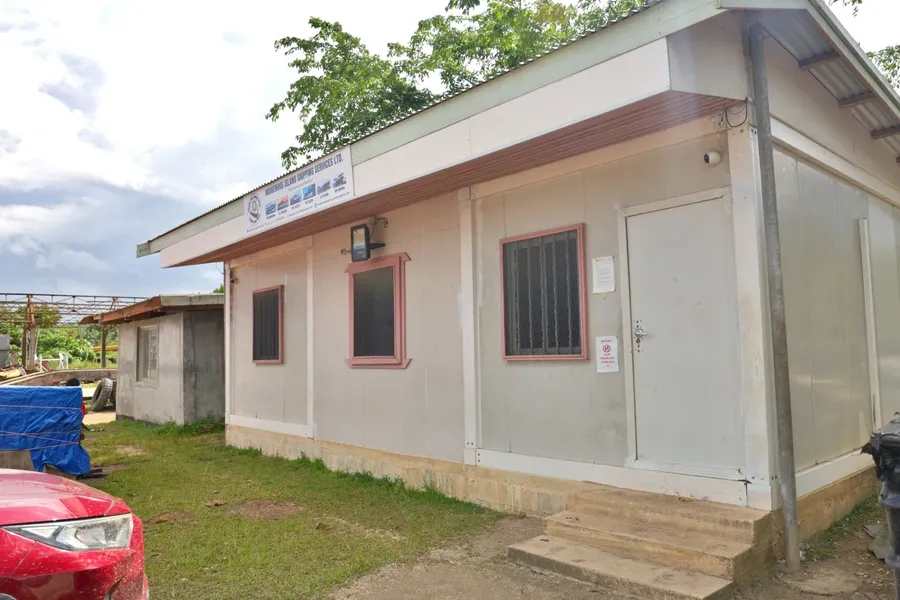
- Indigenous Island Shipping - two ships serving routes to Ambae, Malekula and the Banks Islands from Santo
- MV Tanna Ferry and MV Tauraken - routes between Port Vila and Tanna, sometimes via Erromango and Aneityum
What to Expect When Boarding
When you board the boat, luggage is sorted into different shipping containers depending on where you’re headed. Once onboard, you’ll need to show your ticket and may even be asked to remove your shoes before going upstairs.
We highly recommend packing a small bag for your shoes, plus socks, slippers or clean shoes to wear around the ferry. The metal surfaces can get really hot in the sun, so barefoot wandering is not the relaxed island experience you might be picturing.
Ferry Facilities in Vanuatu
Different ferries have different facilities, so don’t expect the same onboard experience on every route.
Aelan Express offers modern indoor seating areas with tables and chairs, plus a small bar where you can buy hot drinks and snacks during the journey. Passengers are allowed to bring two pieces of luggage, with each piece limited to 12 kg (26 lbs). There's also onboard WiFi.
On Vanuatu Ferry, you’ll find two upstairs decks: one with passenger seating and another outdoor area. The earlier you arrive, the better your choice of spots will be.
Many passengers bring mats or blankets to spread out on the floor, which can actually be quite comfortable. Just avoid high-traffic areas unless you fancy becoming someone’s stepping stone.
There’s a small café onboard stocked with sandwiches, pastries, snacks and hot and cold drinks. The selection gets picked over as the journey goes on, so bringing a few extra snacks is still a smart move.
You’ll also find toilets for both men and women throughout the boat, equipped with sinks and mirrors for freshening up.
Vanuatu Ferry 2 and Vanuatu Ferry 3 also offer onboard WiFi. From what we found, passengers receive the first 60 minutes free, with additional WiFi access available for a fee.
On Big Sista Ferry, passengers will find benches and bunks scattered throughout the boat. There’s also a designated “business class” lounge on the upper deck that is less crowded, sometimes air-conditioned and has padded seating for sleeping, if available.
To access “business class”, head upstairs through the curtain. Someone will come around to collect the fee and give you a wristband.
The lower deck has a small kitchen selling drinks and food, although availability varies and supplies can run out quickly. We strongly recommend bringing your own food and water for journeys on Big Sista.
Island Fortune I and Island Fortune II are modern passenger and cargo vessels. Onboard facilities include comfortable passenger seating decks with sofas, outdoor deck areas and food and beverage service.
Vanuatu Interisland Shipping Services is more of a cargo boat than a passenger ferry, so if you manage to hop onboard, don’t expect cafés, comfy sofas or much in the way of passenger facilities. Bring everything you need for the journey, including food, water, warm layers and a healthy dose of patience.
-SE%20CREDIT%20VanuatuPocketGuide.com-900x600.webp?v=2026-03-07T23%3A56%3A23.237Z)
Ferry Routes and Durations in Vanuatu
So, where can you travel to in Vanuatu by ferry? Regular ferry services connect Port Vila with Malekula and Espiritu Santo, while other ferries and passenger-cargo vessels travel to Tanna, Epi, Ambrym, Pentecost and Maewo.
Where Can You Take the Ferry in Vanuatu?
Ferries move between several of Vanuatu’s island groups and provinces, stopping at both main ports and smaller wharves along the way. The ferry ports and stops in Vanuatu include:
- Efate - Port Vila Harbour
- Espiritu Santo - Luganville Wharf
- Malekula - Litzlitz Wharf
- Tanna - Lenakel Wharf
- Epi - Lamen Bay
- Ambrym - Craig Cove, Ranon and Port Vato
- Pentecost - Nopul, Pangi, Waterfall, Melsisi, Bwatnapni and Loltong
- Maewo - Laone/Kerepei
Learn about the different island groups in The Best Islands & Provinces to Visit in Vanuatu.
How Long Does it Take to Travel by Ferry in Vanuatu?
Taking the ferry in Vanuatu is best suited to travellers who have time, flexibility and a good sense of humour when plans change. The durations of ferry trips are as follows:
- Port Vila (Efate) - Litzlitz (Malekula): 7 hours
- Port Vila (Efate) - Luganville (Santo): 10 hrs 30 mins to 34 hrs 30 mins
- Luganville/Santo (Santo) - Port Vila (Efate): 10 hrs 30 mins to 34 hrs 10 mins
- Port Vila (Efate) - Malekula: 14 hours
- Port Vila (Efate) - Tanna: 15 to 16 hours
- Luganville (Santo) - Litzlitz (Malekula): 1 hr 30 mins
- Port Vila (Efate) - Lamen Bay (Epi): 9 hrs 40 mins
- Lamen Bay (Epi) - Port Vato (Ambrym): 2 hrs 20 mins
- Port Vato (Ambrym) - Craig Cove (Ambrym): 1 hr 10 mins
- Craig Cove (Ambrym) - Ranon (Ambrym): 2 hrs 40 mins
- Ranon (Ambrym) - Nopul (Pentecost): 30 minutes
- Nopul (Pentecost) - Pangi (Pentecost): 1 hr 20 mins
- Pangi (Pentecost) - Waterfall (Pentecost): 1 hour
- Waterfall (Pentecost) - Melsisi (Pentecost): 30 minutes
- Melsisi (Pentecost) - Bwatnapni (Pentecost): 40 minutes
- Bwatnapni (Pentecost) - Loltong (Pentecost): 1 hr 10 mins
- Loltong (Pentecost) - Laone/Kerepei (Maewo): 40 minutes
- Laone/Kerepei (Maewo) - Luganville (Santo): 7 hrs 20 mins
Journey times depend heavily on the route taken and the ferry operator. For example, Aelan Express travels more directly between Port Vila, Litzlitz and Luganville, while Island Fortune 2 takes a longer island-hopping route via Epi, Port Vato, Ambrym, Pentecost and Maewo.
Vanuatu Ferry routes to Santo usually travel via Malekula, while its Tanna service heads south from Port Vila. As always with ferry travel in Vanuatu, confirm the latest sailing times before travelling and build in buffer time.
For more travel times to be aware of, check out Vanuatu Travel Times & Distances: How Long Does it Take to Travel Around Vanuatu?
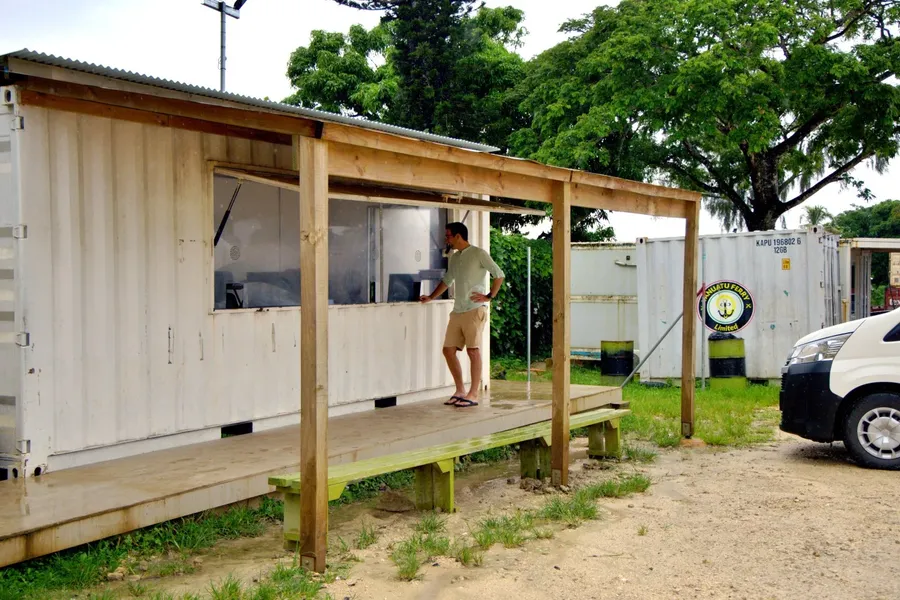
Vanuatu Ferry Schedules & Ticket Offices
Ferries run on ever-changing schedules in Vanuatu, where up-to-date information is usually found directly at the ferry offices, wharves or through the ferry company phone numbers. In other words, don’t rely on a Facebook post from six months ago and hope for the best.
According to locals, schedules can change due to weather, cargo demand or operational needs, so we always recommend confirming sailing dates shortly before travel, building buffer days into your itinerary and having flights as a backup if you’re on a tight schedule.
Vanuatu Ferry Company Phone Numbers
The phone numbers for ferry companies in Vanuatu are as follows:
- Aelan Express - +678 28200
- Island Fortune - +678 28283
- Vanuatu Ferry - +678 26872
- Big Sista Ferry - +678 5683622
- Indigenous Island Shipping - +678 733 6113
- MV Tanna - +678 5922294 or +678 7169010
- MV Tauraken - +678 26872 or +678 26999
Oh, and for more information about getting a local SIM card, check out The Best SIM Card in Vanuatu for Travellers.
Where to Find Ticket Offices in Vanuatu
Another way to find ferry schedules, as well as buy ferry tickets, is to visit the ferry ticket offices. This is often the most reliable way to check the latest departures, especially if the weather has been messing with everyone’s plans.
- Aelan Express, Port Vila - Pierre Brunet Shipping Office, Kumul Highway, downtown Port Vila. Between the market and The Grand Hotel.
- Aelan Express, Santo - Main Street, Luganville, Espiritu Santo.
- Vanuatu Ferry, Port Vila - Corner of Rue Bretagne and Kumul Highway, Port Vila, and Elluk Road, Nambatu, Port Vila.
- Vanuatu Ferry, Santo - Samansin Wharf, Canal Road, Luganville, Santo.
- Island Fortune, Port Vila - Elluk Road, Nambatu, Port Vila. Opposite Asco Motors.
- Indigenous Island Shipping, Santo - Melcoffee Wharf, Luganville, Santo.
Vanuatu Ferry Schedules
Aelan Express operates between Port Vila, Litzlitz and Luganville.
On Monday and Thursday, the ferry departs Port Vila at 6:30 am, reaches Litzlitz at around 1:30 pm and arrives in Luganville by around 5 pm. The total journey takes approximately 10 hrs 30 mins.
On Tuesday and Friday, the ferry travels in the opposite direction, departing Luganville at 6:30 am, reaching Litzlitz at around 8 am and arriving in Port Vila by around 5 pm. Again, allow around 10 hrs 30 mins for the full journey.
Vanuatu Ferry operates routes from Port Vila to Tanna, Santo and Malekula.
The Malekula service usually departs Port Vila every Tuesday at 2 pm, arriving in Malekula at around 4 am the next day. The Santo service continues from Malekula, arriving in Santo around 12 pm to 2 pm. From Port Vila, the full journey to Santo takes approximately 22 to 24 hours.
For Tanna, Vanuatu Ferry 2 may depart Port Vila at around 2 pm, arriving in Tanna the following morning. The crossing takes around 15 to 16 hours, although sailing days and times can change, so check the latest schedule before travelling.
There is usually one trip per week to Santo and Malekula, increasing to two trips during busy periods.
Island Fortune schedules can change weekly due to weather, cargo demand, wharf conditions and operational needs, so treat this as a rough indication only.
The northbound route generally runs:
Port Vila (Efate) - Lamen Bay (Epi) - Port Vato (Ambrym) - Craig Cove (Ambrym) - Ranon (Ambrym) - Nopul (Pentecost) - Pangi (Pentecost) - Waterfall (Pentecost) - Melsisi (Pentecost) - Bwatnapni (Pentecost) - Loltong (Pentecost) - Laone/Kerepei (Maewo) - Santo
As a rough guide, the sailing can depart Port Vila around midnight, reaching Epi in the morning, Ambrym around midday to mid-afternoon, Pentecost from late afternoon into the evening, Maewo later in the evening and Santo the following morning.
The southbound route generally runs:
Santo - Laone/Kerepei (Maewo) - Loltong (Pentecost) - Bwatnapni (Pentecost) - Melsisi (Pentecost) - Waterfall (Pentecost) - Pangi (Pentecost) - Nopul (Pentecost) - Ranon (Ambrym) - Craig Cove (Ambrym) - Port Vato (Ambrym) - Lamen Bay (Epi) - Port Vila (Efate)
As a rough guide, the return sailing leaves Santo in the early morning, reaches Maewo around early afternoon, travels down Pentecost through the afternoon and evening, reaches Ambrym later in the evening, stops at Epi overnight and arrives in Port Vila the following morning.
In short, this is not the “quick dash between islands” option; it’s the full outer-island milk run. But for travellers heading to the smaller stops, it can be one of the most useful ferry routes in Vanuatu.
How Much Do the Ferries in Vanuatu Cost?
Ferry travel is significantly cheaper than flying. An adult ticket between Port Vila and Espiritu Santo typically costs around 10,000-12,000 VT one-way, including a limited luggage allowance.
Play around with the table below to check approximate prices between the islands. Note that prices are subject to change.
Fares for outer islands and cargo boats vary quite a bit, so it's best to confirm prices locally before you travel.
Booking Your Ferry in Vanuatu
Don't expect to book your ferry tickets months in advance; that's just not how things work in Vanuatu. Tickets are usually purchased in person at ferry offices or directly at the wharf, sometimes only the day before departure.
According to locals, schedules can change frequently, so we always recommend:
- Confirming sailing dates shortly before travel
- Building buffer days into your itinerary
- Having flights as a backup if you're on a tight schedule
For the most reliable information, head to the wharf offices in Port Vila or Luganville; they'll have the most up-to-date details on departures and any schedule changes.
Seaport Domestic Departure Tax
When departing domestically by ferry in Vanuatu, you may need to pay the Domestic Departure Tax at the wharf before boarding. For ferry departures, this is usually 100-200 VT per person.
There is typically a booth or kiosk at the ferry wharf where the fee is collected, and payment is made in cash. Yes, this is one of those “keep a few small notes handy” moments.
Once paid, you’ll receive a receipt or ticket showing that you’ve paid the departure tax. Keep this with you, as ferry staff may ask to see it when you board the boat.
For more practical departure advice, see Leaving Vanuatu: Departure Tips and learn more about departure taxes in the Vanuatu Tipping & Tax Guide for Travellers.
Editor's Choice
Moso Island Day Tour
Spend a full day exploring one of Efate's best-kept secrets. The Moso Island Day Tour takes you on a scenic boat ride to two hidden caves and a dramatic coastline, through three snorkelling...
%20CREDIT%20VanuatuPocketGuide.com-900x600.webp?v=2026-03-08T00%3A17%3A49.580Z)
How to Take the Ferry to Espiritu Santo
Santo is one of the easiest islands to reach by ferry in Vanuatu, with services travelling between Port Vila on Efate and Luganville on Santo.
The quickest ferry option is Aelan Express, which travels between Port Vila, Litzlitz and Luganville. The northbound service usually departs Port Vila at 6:30 am on Monday and Thursday, reaches Litzlitz at 1:30 pm and arrives in Luganville by 5 pm. The full journey takes 10 hrs 30 mins.
In the other direction, Aelan Express usually departs Luganville at 6:30 am on Tuesday and Friday, reaches Litzlitz at 8 am and arrives back in Port Vila by 5 pm. Again, the journey takes 10 hrs 30 mins.
Tickets for Aelan Express can be arranged at the Pierre Brunet Shipping Office on Kumul Highway in downtown Port Vila, between the market and The Grand Hotel, or at the Aelan Express office on Main Street in Luganville.
Vanuatu Ferry also travels from Port Vila to Santo, usually via Malekula. It typically departs Port Vila at 2 pm on Tuesday, reaches Malekula at 4 am the next day and continues to Santo, arriving between 12 pm and 2 pm. The full journey from Port Vila to Santo takes 22 to 24 hours. Vanuatu Ferry uses offices at the corner of Rue Bretagne and Kumul Highway, Port Vila, and Elluk Road, Nambatu, Port Vila. Its Santo wharf is Samansin Wharf on Canal Road, Luganville.
For Island Fortune services, Island Fortune 1 offers a shorter Port Vila to Santo route via Litzlitz on Malekula, taking around 17 hours from Port Vila to Santo, while Island Fortune 2 takes the slower outer-island route via Epi, Port Vato, Ambrym, Pentecost and Maewo, taking around 34 hrs 30 mins from Port Vila to Santo and around 34 hrs 10 mins on the return journey.
See more ways to get to Santo in our Espiritu Santo Transport Guide.
-SEB%20CREDIT%20VanuatuPocketGuide.com-900x600.webp?v=2026-03-08T01%3A09%3A04.810Z)
How to Take the Ferry to Malekula
Malekula is served by both direct and through-route ferries, making it one of the more practical outer islands to reach by sea.
Aelan Express stops at Litzlitz on its route between Port Vila and Luganville. From Port Vila, the ferry usually departs at 6:30 am on Monday and Thursday, arriving in Litzlitz at 1:30 pm. That makes the Port Vila to Litzlitz journey 7 hours.
Travelling from Santo, Aelan Express usually departs Luganville at 6:30 am on Tuesday and Friday, reaching Litzlitz at 8 am. That crossing takes 1 hr 30 mins.
Tickets for Aelan Express can be arranged through the Pierre Brunet Shipping Office in Port Vila or the Aelan Express office on Main Street in Luganville.
Vanuatu Ferry also travels from Port Vila to Malekula, usually departing Port Vila every Tuesday at 2 pm and arriving in Litzlitx Wharf at 4 am the next day. The journey takes 14 hours, so yes, this is very much an overnight trip.
Vanuatu Ferry tickets can be arranged through its Port Vila offices.
Island Fortune 1 also serves Litzlitz on Malekula, usually departing Port Vila at 8 am and arriving in Litzlitz at 8:30 pm, based on the supplied timetable. The journey takes 12 hrs 30 mins. The ferry then continues to Santo, arriving at 1 am the next day. From Santo, it usually departs at 12 pm and reaches Litzlitz at 4 pm, before continuing to Port Vila and arriving at 5 am the next day.
Island Fortune schedules can change weekly, so travellers should treat this as a rough indication only and confirm the current timetable before booking.
See more ways to get to Malekula in our Malekula Transport Guide.

How to Take the Ferry to Tanna
Tanna is served by Vanuatu Ferry, with services usually departing Port Vila on Wednesday or Saturday.
The ferry typically leaves Port Vila at 2 pm and arrives in Tanna between 5 am and 6 am the next day. The journey takes 15 to 16 hours, depending on sea conditions.
This southern crossing can be rougher than some of the northern island routes, so if you’re prone to seasickness, this is the route where you’ll want to be prepared. Pack what you need for the night, including food, water, warm layers and seasickness tablets if needed.
You may also hear about MV Tanna and MV Tauraken for southern island services. Contact MV Tanna on +678 5922294 or +678 7169010, and MV Tauraken on +678 26872 or +678 26999 to confirm current sailings before you plan around them.
See more ways to get to Tanna in our Tanna Transport Guide.
-SE%20CREDIT%20VanuatuPocketGuide.com-900x600.webp?v=2026-03-07T23%3A56%3A20.446Z)
How to Take the Ferry to Epi, Ambrym, Pentecost, Maewo and Ambae
Several of Vanuatu’s central and northern outer islands can be reached by ferry, but this is where travel plans need a good dose of flexibility.
Island Fortune operates island-hopping services from Port Vila to outer-island stops, with Island Fortune 2 travelling between Port Vila and Santo via Lamen Bay on Epi, Craig Cove and Ranon on Ambrym, several stops on Pentecost, Laone/Kerepei on Maewo and Santo.
Based on the timetables posted on their Facebook page, the Island Fortune 2 route from Port Vila to Santo goes:
Port Vila (Efate) - Lamen Bay (Epi) - Port Vato (Ambrym) - Craig Cove (Ambrym) - Ranon (Ambrym) - Nopul (Pentecost) - Pangi (Pentecost) - Waterfall (Pentecost) - Melsisi (Pentecost) - Bwatnapni (Pentecost) - Loltong (Pentecost) - Laone/Kerepei (Maewo) - Santo (Espiritu Santo)
The return journey follows the same route in reverse. From Port Vila to Santo, the full Island Fortune 2 journey takes around 34 hrs 30 mins, while the return from Santo to Port Vila takes around 34 hrs 10 mins.
Island Fortune schedules can change weekly due to weather, cargo demand and operational needs, so treat these timings as a rough indication only. Confirm the latest sailing by calling Island Fortune on +678 28283 or visiting the ticket office in Nambatu, opposite Asco Motors on the waterfront.
For Ambae, ferries are generally arranged from Santo rather than Port Vila. Indigenous Island Shipping operates interisland cargo and passenger services from Melcoffee Wharf in Luganville, serving routes to Ambae and the northern islands. Contact Indigenous Island Shipping on +678 733 6113 to confirm current sailings.
See more ways to explore these islands in the Vanuatu Transport Guide: 20 Best Ways to Get Around Vanuatu.
Where to Stay
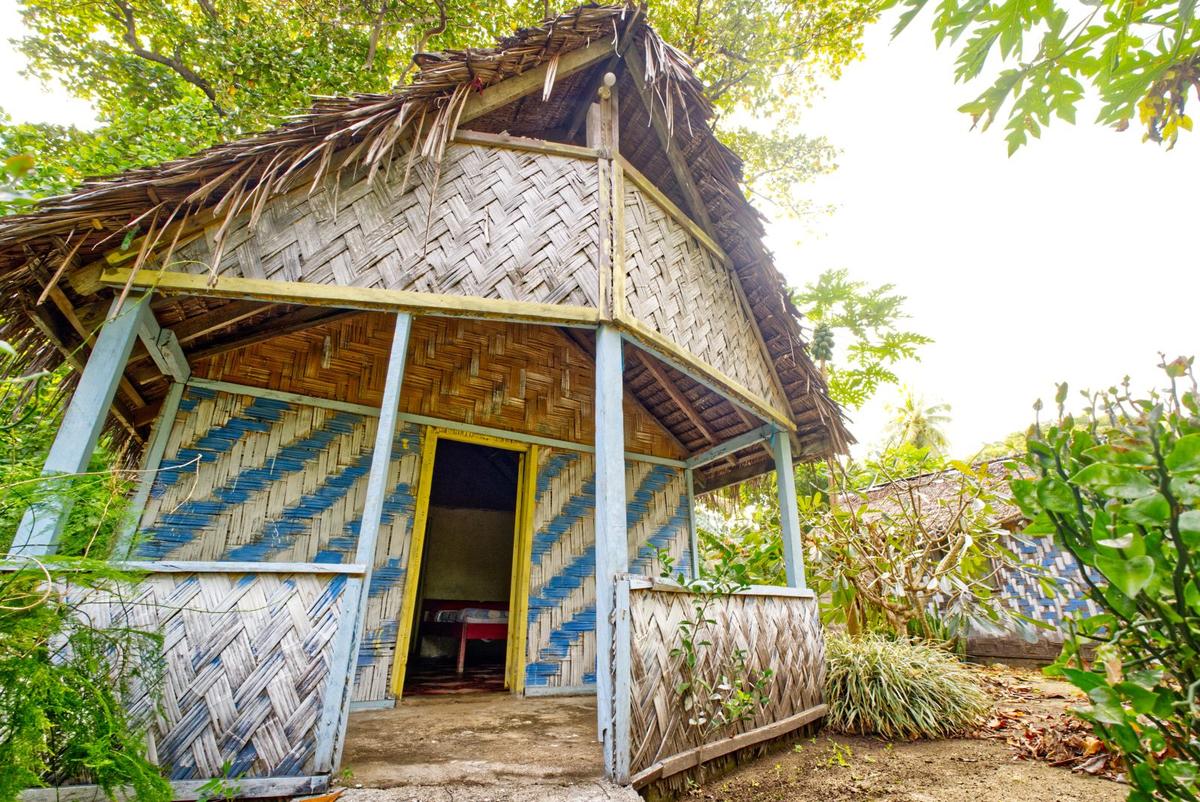
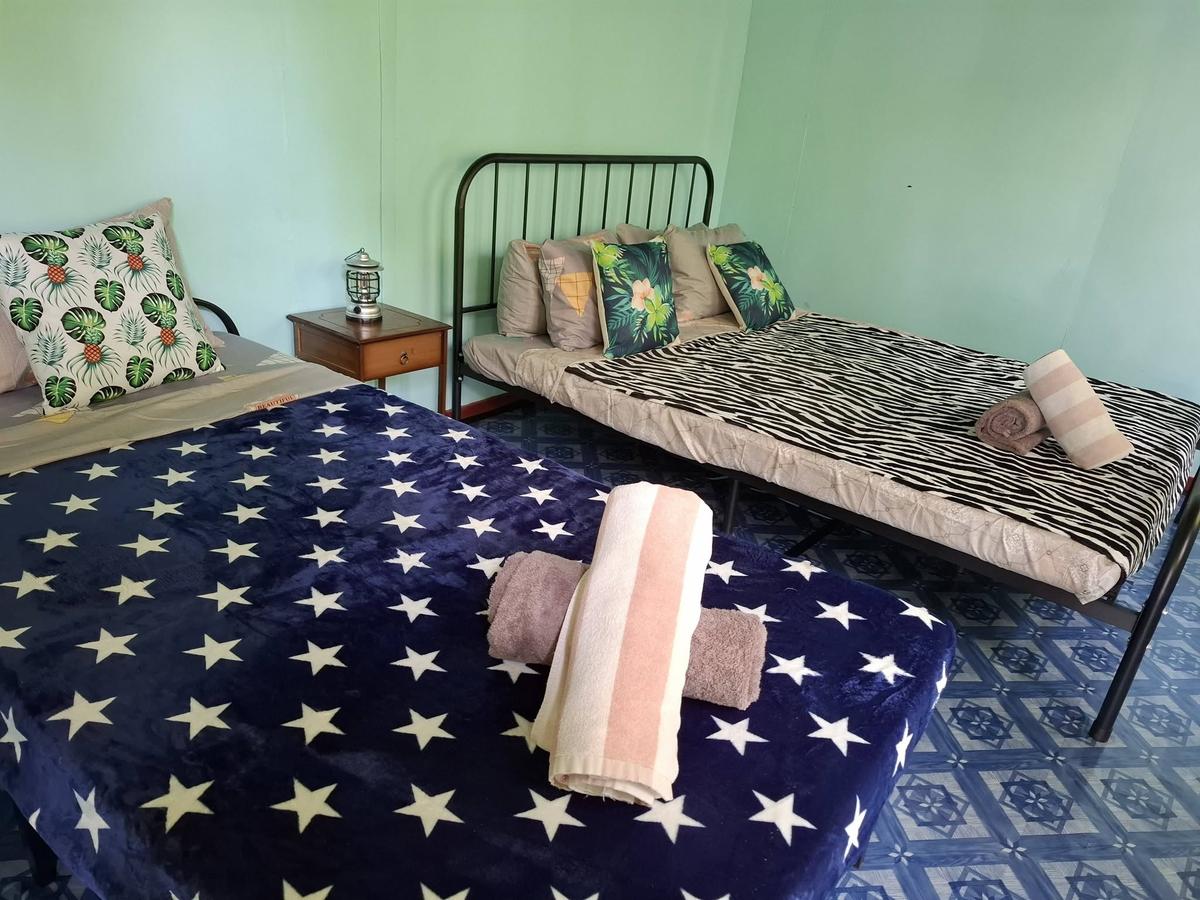
White Beach Bungalows
Back Bungalow · Front Bungalow
VT 2500/night
How to Take the Ferry to the Banks Islands
The Banks Islands are among Vanuatu’s more remote island groups, so ferry travel here is less straightforward than the main routes between Port Vila, Malekula and Santo.
Services to the Banks Islands are usually arranged from Luganville on Santo, with Indigenous Island Shipping operating interisland cargo and passenger services from Melcoffee Wharf. These are more cargo-style journeys than comfortable passenger ferry rides, so bring everything you need for the trip, including food, water, warm layers and patience. Lots of patience.
As with many outer-island services in Vanuatu, schedules can change depending on weather, cargo, passenger demand and operational needs. The best approach is to confirm the latest sailing directly with Indigenous Island Shipping on +678 733 6113 or visit Melcoffee Wharf in Luganville.
Boat Transfers to the Smaller Outer Islands in Vanuatu
While the larger islands serve as the main hubs for each province in Vanuatu, getting to those picture-perfect tiny offshore islands is surprisingly straightforward once you know the options.
For areas where tourism is well-established, island resorts typically operate their own boat transfers between the mainland and their respective islands.
Islands where this convenient service operates include:
- Hideaway Island Resort, Port Vila
- The Moso and Tranquillity Island Resort on Moso Island, Port Vila
- Iririki Island Resort, Port Vila
- Erakor Island Resort, Port Vila
- Aore Island Resort and Freshwater Plantation, Espiritu Santo
- Dany Island Resort, Dany Island
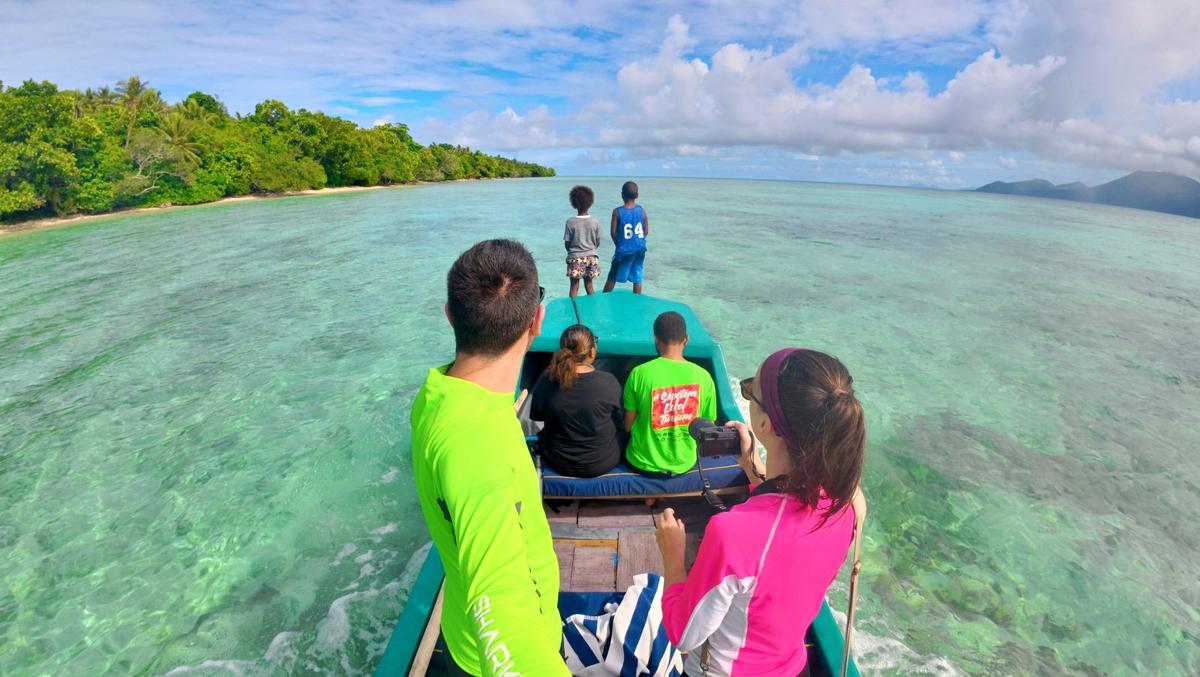
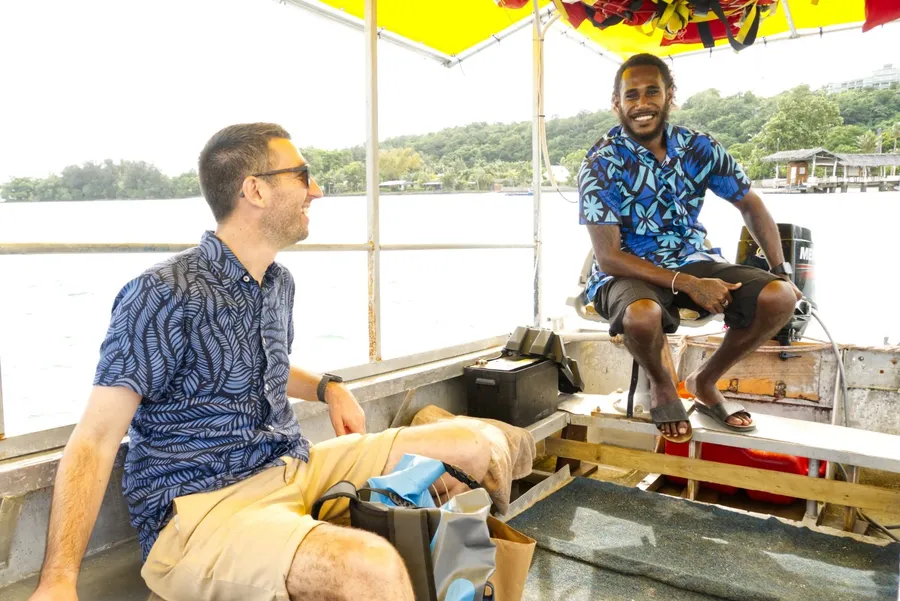
For the more remote outer islands where tourism isn't established, local chartered "banana boats" (open fibreglass boats) are your ticket to adventure. Just make sure they have lifejackets – safety first!
We recommend organising these transfers through your accommodation, as they can contact local skippers who happen to be on the island and operating during your visit. From our experience, this approach saves you time and ensures you're working with reliable operators who know the waters well.
As there's a lot to go through when it comes to smaller boat travel, check out How to Catch a Boat Transfer in Vanuatu: The Complete Guide to dive more into the details.
-SEB%20CREDIT%20VanuatuPocketGuide.com-900x600.webp?v=2026-03-07T23%3A45%3A04.445Z)
Frequently Asked Questions About Taking a Ferry in Vanuatu
Now that you know about how to take the ferry in Vanuatu, here are the answers to the internet's frequently asked questions about Vanuatu's ferry services!
Is There a Ferry Between Port Vila and Espiritu Santo?
Yes. Ferries travel between Port Vila on Efate and Luganville on Espiritu Santo with Aelan Express, Vanuatu Ferry and Island Fortune.
Aelan Express is the quicker option at 10 hrs 30 mins via Litzlitz. Vanuatu Ferry usually takes 22 to 24 hours via Malekula, while Island Fortune can take 17 hours via Litzlitz or 34 hrs 30 mins on its longer outer-island route.
Is There a Ferry Between Port Vila and Malekula?
Yes. Aelan Express travels from Port Vila to Litzlitz in 7 hours, while Vanuatu Ferry takes 14 hours to reach Malekula.
Island Fortune 1 also serves Litzlitz, taking 12 hrs 30 mins from Port Vila, based on the supplied timetable.
Is There a Ferry Between Espiritu Santo and Malekula?
Yes. Aelan Express travels from Luganville to Litzlitz in 1 hr 30 mins.
Island Fortune 1 also connects Santo with Litzlitz, taking 4 hours, based on the supplied timetable.
Is There a Ferry Between Port Vila and Tanna?
Yes. Vanuatu Ferry operates services between Port Vila and Tanna, usually taking 15 to 16 hours.
You may also hear about MV Tanna and MV Tauraken for southern island services. Always confirm current sailings before planning around them, as this route can be rougher than the northern crossings.
Which Outer Islands Can You Reach by Ferry in Vanuatu?
Island Fortune services may reach Emae, Epi, Ambrym, Pentecost, Maewo, Malekula and Santo, depending on the vessel and weekly timetable.
Island Fortune 1 has shown services to Sulua on Emae, Port Quimme, Panita, Litzlitz and Santo. Island Fortune 2 has shown services to Lamen Bay, Port Vato, Craig Cove, Ranon, Nopul, Pangi, Waterfall, Melsisi, Bwatnapni, Loltong, Laone/Kerepei and Santo.
Indigenous Island Shipping also operates from Santo to Ambae and the Banks Islands.
How Long Do Ferries Take in Vanuatu?
Journey times vary a lot depending on the route and operator. As a rough guide, Port Vila to Litzlitz takes 7 hours to 12 hrs 30 mins, Port Vila to Santo takes 10 hrs 30 mins to 34 hrs 30 mins, Port Vila to Tanna takes 15 to 16 hours and Port Vila to Lamen Bay on Epi takes 9 hrs 40 mins.
The shorter services are usually more direct. The longer ones stop at multiple outer islands, so think “island-hopping adventure” rather than “quick transfer”.
How Often Do Ferries Run in Vanuatu?
Aelan Express usually runs Port Vila to Litzlitz and Luganville on Monday and Thursday, then Luganville to Litzlitz and Port Vila on Tuesday and Friday.
Vanuatu Ferry usually runs once a week to Santo and Malekula, with extra trips during busy periods, and Tanna services usually run on Wednesday or Saturday. Island Fortune schedules can change weekly, so always confirm the latest timetable before travelling.
Where Do You Buy Ferry Tickets in Vanuatu?
Tickets are usually bought in person at ferry offices or wharves.
Useful offices include Pierre Brunet Shipping Office for Aelan Express in Port Vila, the Aelan Express office on Main Street in Luganville, Vanuatu Ferry offices in Port Vila, Island Fortune in Nambatu and Indigenous Island Shipping at Melcoffee Wharf in Luganville.
Are Vanuatu Ferries Comfortable?
Some are comfortable, while others are more cargo boat than passenger ferry.
Aelan Express, Vanuatu Ferry, Big Sista and Island Fortune have passenger areas and varying onboard facilities. For cargo-style vessels, bring your own food, water, warm layers and patience. Quite a bit of patience.
Are Ferry Schedules Reliable in Vanuatu?
Not always. Weather, cargo demand, wharf conditions and operational changes can affect ferry schedules.
Always confirm your sailing close to departure, arrive early and leave buffer days in your itinerary, especially before flights.
More About the Ferries in Vanuatu
That's it for our complete Vanuatu ferry guide. For more tips on travelling and transport around Vanuatu, take a look at the following guides:
- How to Catch Boats & Water Taxis in Vanuatu
- Taxis in Vanuatu: Taxi Fares, How to Use & More
- Taking the Bus in Vanuatu: Bus Fares, Routes & More
Finally, if there's anything we've missed, you're likely to find it in our Vanuatu Transport Guide: 10 Best Ways to Get Around Vanuatu.
-%20BNCC%20CREDIT%20VanuatuPocketGuide.com-1-900x600.webp?v=2026-03-08T00%3A36%3A15.267Z)