

-SEB%20CREDIT%20VanuatuPocketGuide.com.webp?v=2026-03-20T23%3A53%3A28.003Z)
The Complete Guide to Driving in Vanuatu
Whether you're exploring the coastline and bustling capital on Efate or venturing to the remote blue holes of Santo, there's nothing like a road trip in paradise! All you need to do is sort out the logistics of hiring a car and know some essential road rules to keep yourself and others safe.
Luckily, this complete guide to driving in Vanuatu can help with all of the above and more, covering driver's licences, vehicle rentals and the road rules you need to know.
This article is based on real on-the-ground research, not on AI scraping old content from the internet. Learn how we use AI!
Table of Contents
How Long Does it Take to Drive Around Vanuatu?
There are only two islands where you can rent a vehicle in Vanuatu: Efate (Port Vila) and Santo. The important thing to note about the time it takes to drive around these islands is the state of the roads. While your GPS may say it takes 2 hrs 40 mins to drive around Efate on the Efate Ring Road, the abundance of deep potholes can drastically extend the drive time.
More accurately, this is how long it takes to drive around Vanuatu:
- Efate Ring Road - 130 km (81 mi) - 3 hrs in a truck, 4-5 hrs in a van or low-clearance vehicle
- Santo East Coast Road - 63 km (39 mi) - 1 hr 30 mins
Go in-depth on the driving times around the islands in our guide, Travel Times & Distances: How Long Does it Take to Travel Around Vanuatu?

What License Do You Need to Drive in Vanuatu?
First things first, when you want to drive in Vanuatu, you need to make sure you have a valid driver's license. Your driver's license needs to have been valid for more than one year.
Luckily, foreign driver's licenses are accepted in Vanuatu. Those who might want to play it extra safe are those whose driving license is not written in English or French. In this case, it's best to also travel with an International Driving Permit (IDP).
Learn more about driver's licenses and using your IDP in Vanuatu in our guide, Can You Drive in Vanuatu with an Overseas License?
Renting a Vehicle in Vanuatu
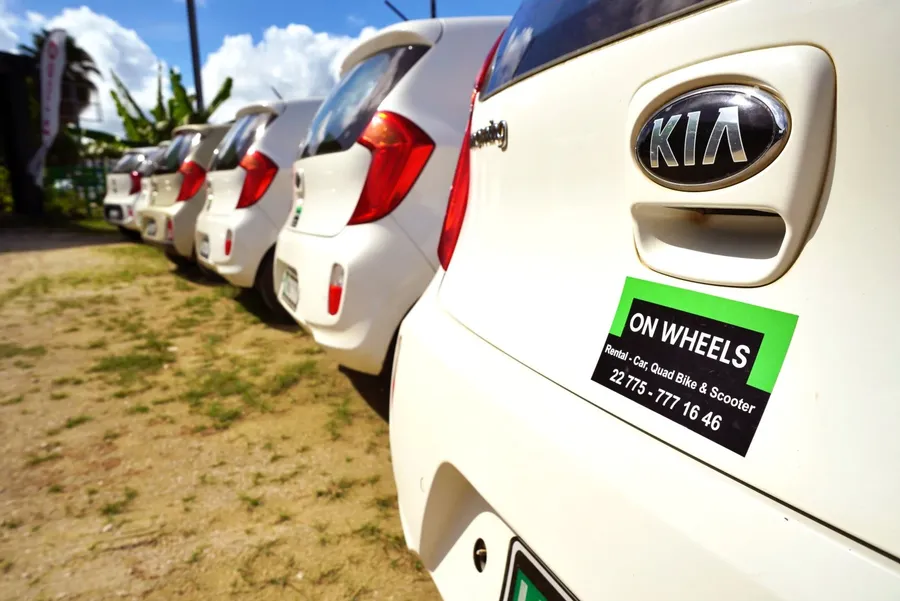
Car rental options in Vanuatu are more limited compared to larger Pacific destinations, with most rental companies concentrated around Port Vila and the main airport area on Efate, as well as Luganville on Santo.
Although the legal driving age in Vanuatu is 18, most vehicle rental companies will only rent to drivers aged 21 years and older. The only exceptions we have found are with some of the locally-run car rental operators (compared to the international brands). Also, scooter rentals are available for young drivers aged 18+; see Scooter & Quad Hire in Vanuatu: Where to Rent, Cost & More.
Car Hire Companies in Vanuatu
Compare vehicle rental companies in the following: 15 Best Car Rentals in Vanuatu.
Vehicle rental can usually be delivered to Bauerfield International Airport, Santo-Pekoa International Airport or your accommodation for free or a small fee.
Most vehicle rental companies in Vanuatu will go through the standard process of a car inspection, taking your driver's licence details and sometimes offering insurance options, additional drivers, etc. Get a full cost breakdown in The Cost of Renting a Car in Vanuatu: Full Car Rental Cost Breakdown.
Remember that on returning your vehicle, you need to fill up the fuel tank or else you will be charged a premium for fuel - more on petrol stations in the section below.
What are the Rental Vehicles Like in Vanuatu?
Rental vehicles in Vanuatu vary depending on the company. Most rental companies generally offer modern/good quality fleets, with some operators replacing their vehicles every four to five years to maintain quality standards.
For cheaper vehicle hire, they are not as well-maintained as you might be used to in more developed countries. Nevertheless, they tend to be suitable for the island's road conditions.
That being said, there are no mechanics outside of the Port Vila and Luganville areas, so it's important to check your rental vehicle (and get the phone number of the rental company) before you head out.
We detail the car rental companies with the newest vehicles in the 10 Best Car Rentals in Vanuatu.
There is a reasonable selection of cars to choose from in Vanuatu, most rental companies favouring SUVs and pickup trucks. Popular models include Toyota Hilux double cabins, Mazda CX-5 SUVs, and Toyota RAS vehicles. You'll soon realise that sturdy vehicles are essential when you hit the roads here! Some rental companies also have compact cars, but these tend to be better for inner-city driving.
Most vehicles have automatic transmission, whilst a few may be manual, especially utes/pick-up trucks and minivans.
Many rental companies offer additional services such as free delivery to accommodations within town areas, child seats (some companies are expanding their availability), and airport pickup services. Some operators work on a zero-deposit system with signed rental agreements, while others require pre-authorisation holds on credit cards.
Insurance options typically include basic coverage with excess amounts, and many companies offer excess reduction insurance for additional daily fees. Be aware that some areas may have driving restrictions - certain companies limit vehicles to specific roads for safety and vehicle protection reasons.
Scooters and quad bikes are also an option, which you can learn more about in Scooter Hire in Vanuatu: Where to Rent, Cost & More.
For more advice on hiring a vehicle in Vanuatu, head to our full guide, What You Need to Hire a Car in Vanuatu.
What are the Roads Like in Vanuatu?
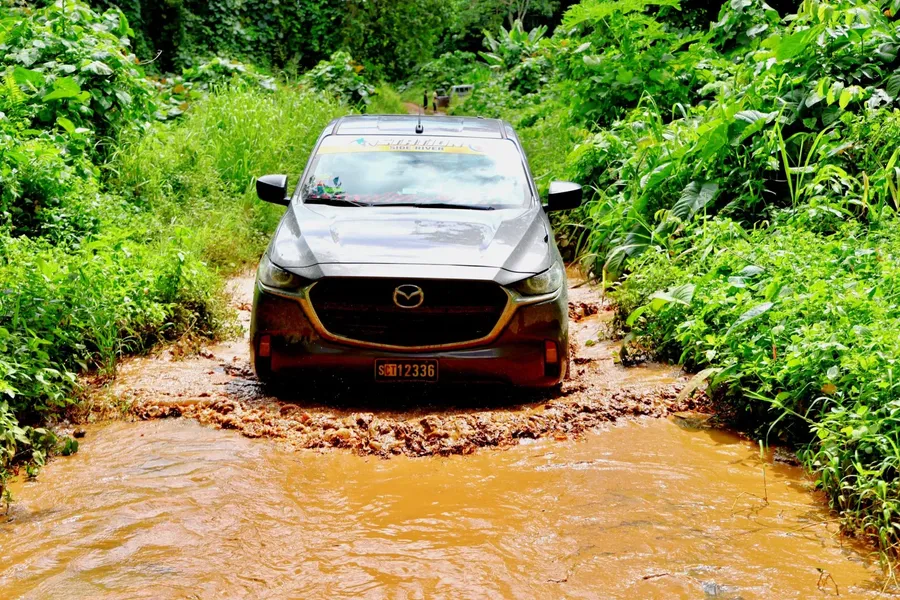
Vanuatu's roads present significant challenges for drivers, with only the main roads in Port Vila and Luganville consistently paved. Most other roads are gravel, dirt or of very poor quality, with extensive potholes, rough terrain and rapid deterioration after heavy tropical rains being common throughout the islands.
Is it Easy to Drive Around Vanuatu?
The road network in Vanuatu can be quite complex and challenging to navigate. While main roads in Port Vila and Luganville are generally paved, most roads outside these urban centres suffer from dramatic potholes, as well as being gravel or dirt tracks. Roads like Ohlen Road near Port Vila and many rural access roads are notorious for being extremely rugged.
Directional signage can be very limited throughout the country, so it's essential to plan your route carefully in Vanuatu rather than rely solely on road signs and Google Maps to point you in the right direction.
One that catches many first-time visitors out is the one-way road in Downtown Port Vila. The Kumul/Lini Highway traffic flows south in the centre of town. To head north, you must take Rue De Paris or Rue Du General De Gaulle.
Traffic is generally light in most parts of Vanuatu, with the exception of central Port Vila and Luganville where more congestion occurs, especially between 6:30 and 7:30 pm.
Vanuatu is definitely not a place to speed around. Road conditions vary dramatically, and there are many hazards to watch out for; potholes being the main thing, but also children are likely to be playing on the roadside, especially when school closes and then again around 5-6 pm when they are outside playing during the cooler hours.
There are also animals on the road to watch out for, including dogs and the occasional pig. Many roads are not well-lit at night, so be sure to slow down considerably after dark.
Do You Need a 4WD in Vanuatu?
Most tourists will definitely benefit from a 4WD in Vanuatu. While main roads in Port Vila and Luganville are sealed, many rural roads and access roads to attractions are unsealed, rough and often require at least high-clearance vehicles.
Many rural communities rely on vulnerable roads that can be cut off by floods, impacting access to markets, schools and hospitals. A 4WD or at least a high-clearance vehicle is strongly recommended for exploring beyond the main urban centres.
You'll find that rental companies in Vanuatu offer various 4WD and SUV options to suit different budgets and requirements. Note that most 4WD vehicle rentals are manual.
What Side of the Road Do They Drive on in Vanuatu?
Vanuatu drives on the right side of the road, following French driving conventions from its colonial heritage.
Speed limits are posted in kilometres per hour, and traffic laws generally follow international standards. See the "10 Road Rules in Vanuatu You Need to Know" section below to learn some road rules that usually catch tourists.
For more facts like this, check out 25 Fun Facts About Vanuatu.
Gas Stations in Vanuatu
When you're hiring a vehicle, you're going to need to know where to fuel up.
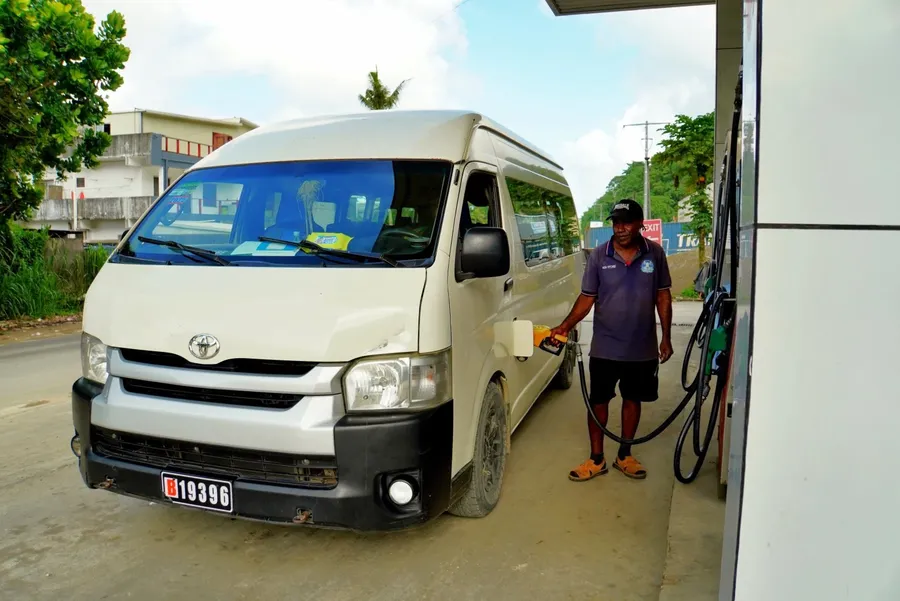
On Efate, most petrol stations can be found in Port Vila and the surrounding areas. Most petrol stations in Port Vila operate between 6 am and 7/8 pm, however, Pacific Station Fresh Wota is open 24/7.
On Santo, there are only petrol stations in Luganville, so it's essential to fuel up before taking long trips.
On the smaller islands like Tanna, petrol stations are primarily located in Lenakel, Louanatom and Isangel, all on the west side of the island. Malekula also has a fuel station in Litzlitz.
Note that petrol stations in Vanuatu are typically full-service petrol stations, meaning a station attendant fills up your vehicle with fuel for you.
Tell the attendant how much fuel you would like or how much money you'd like to spend, then pay the attendant with cash. Vanuatu vatu (VUV) is the local currency used.
For the most recent fuel prices and car rental information, check out The Cost of Renting a Car in Vanuatu: Full Car Rental Cost Breakdown.
Editor's Choice
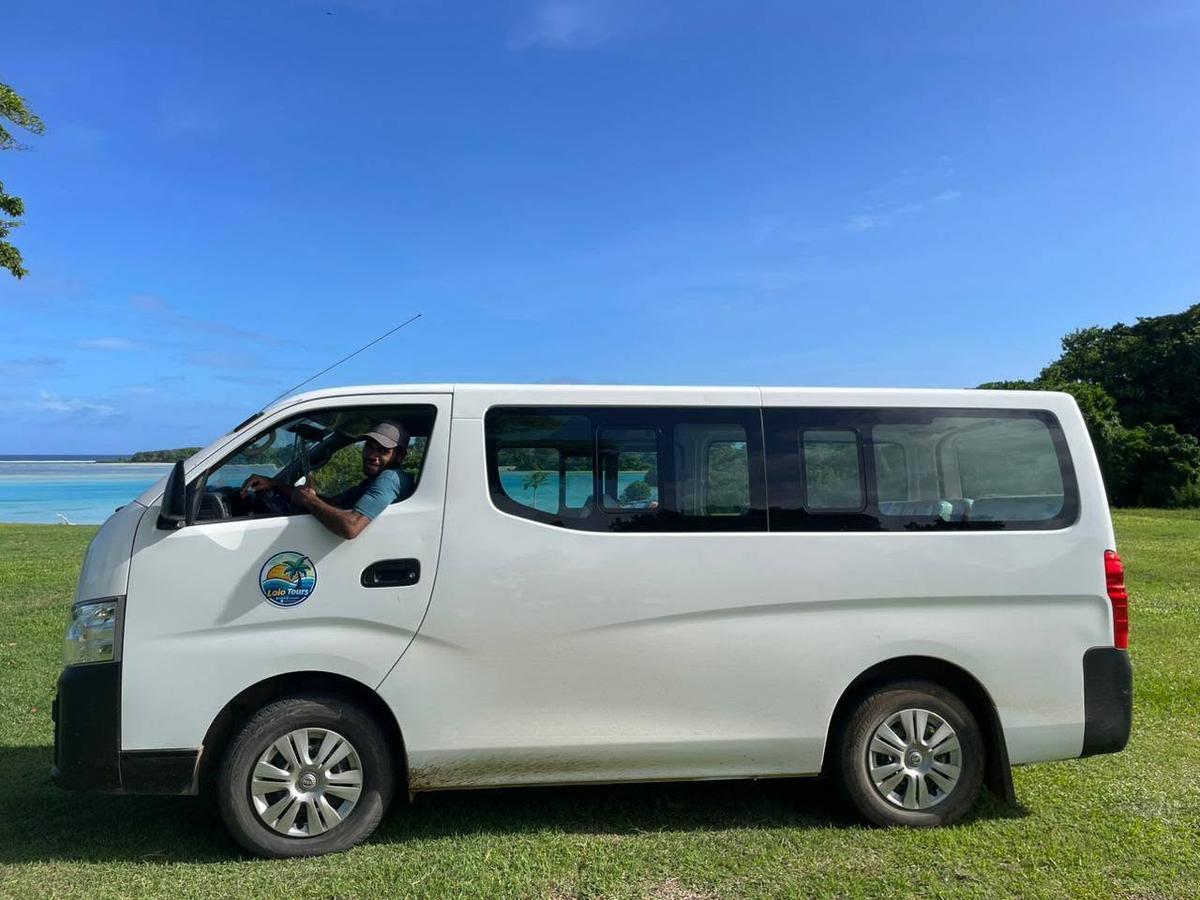
Lolo Tours
Getting around Port Vila is easy with Lolo Tours. Whether you need a straightforward airport pickup, a ride to one of Port Vila's most loved attractions, or a night out at the famous Friday fire...
10 Road Rules in Vanuatu You Need to Know
While most road rules in Vanuatu are similar to those in other countries, especially Australia and the United Kingdom, there are a few differences that many visitors are surprised by or find different from home.
We'll go through some of the most important road rules, which we pulled from Vanuatu's official Road Traffic Control Act Cap 29, for visitors here:
- Drive on the right side of the road.
- It is legal and mandatory to wear a seatbelt in Vanuatu, where they are provided.
- The maximum speed limit is 50 kph (31 mph) in town areas and 80 kph (50 mph) outside of these areas - signs usually indicate the speed limit in a given area.
- At roundabouts, give way to vehicles that have already engaged with the roundabout.
- Also at roundabouts, signalling depends on how far around the roundabout you intend to travel. If you plan to exit more than halfway around, you must signal left when entering. If exiting earlier, signalling requirements change based on the exit position.
- Hand signals are officially recognised and expected. Drivers must indicate manoeuvres using hand signals or lights.
- Sounding your horn is allowed only to give a necessary warning. Using the horn casually or aggressively is an offence.
- Overtaking is done on the left. Before overtaking, drivers must clearly indicate their intention using lights or hand signals, and if necessary, sound the horn to warn the vehicle ahead. Drivers are also required to make sure the manoeuvre can be completed safely without endangering other road users.
- At intersections without traffic signs, the general rule is to give way to traffic approaching from your right. This applies even when vehicles are arriving from the opposite direction at crossroads or forked roads. However, if a road has been designated a major road, traffic on that road has right of way. Any road marked with a STOP or GIVE WAY sign must always yield, regardless of direction of approach.
- Any accident causing injury must be reported to the police within 24 hours, and even property damage must be reported within five days. On outer islands, longer reporting periods apply, but failure to report at all is an offence.
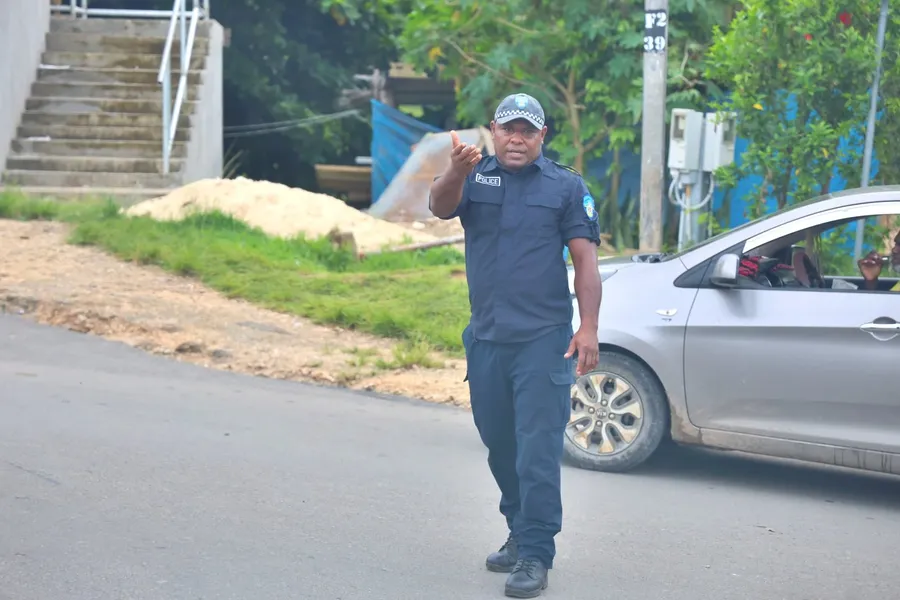
When asking drivers all over Vanuatu what the speed limits are and what road rules are in place, admittedly, none of them knew precisely. The reality is that speed limits are more determined by the road conditions. As for road rule enforcement, there isn't much. Police are seen directing traffic in Port Vila and Luganville during heavy traffic periods. Other than that, there is not much police presence on the roads.
You can find more tips for driving in What You Need to Hire a Car in Vanuatu.
Quick Safety Tips for Driving in Vanuatu
While sticking to the official road rules is a good way to keep safe while driving in Vanuatu, there are some additional safety tips we've picked up while exploring the islands:
- Take it easy and stick to the speed limit
- Watch out for potholes
- Watch out for children on the road
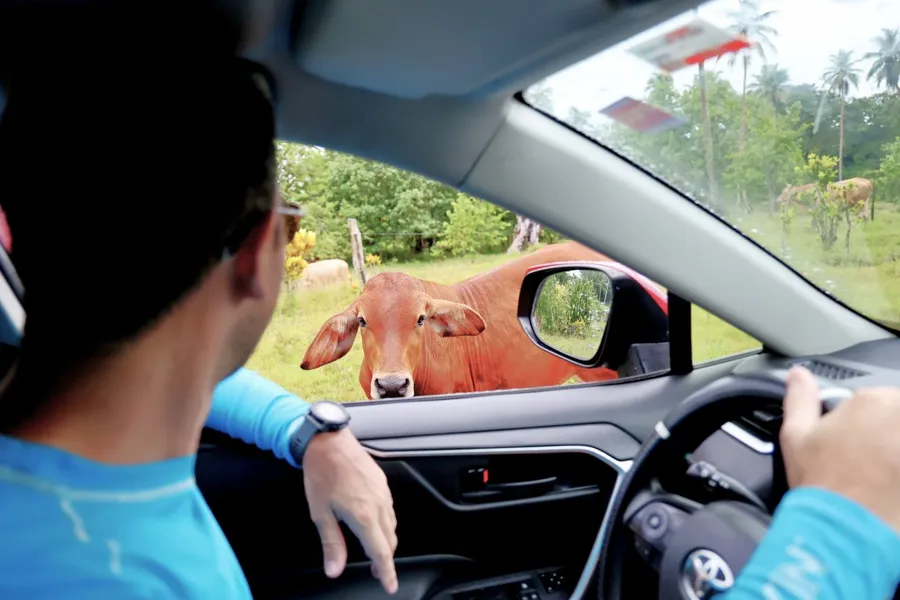
- Watch out for animals on the road
- Don't leave valuables in your vehicle unattended
- Don't park under a coconut tree!
For more safety tips, head on over to our guide, Vanuatu Safety Tips: Is it Safe to Travel to Vanuatu?
More About How to Drive in Vanuatu
That's it for our complete guide on how to drive in Vanuatu, including 10 essential road rules in Vanuatu that you need to know. For more road trip advice, check out more of our guides:
- Travel Times & Distances: How Long Does it Take to Travel Around Vanuatu?
- 10 Best Car Rentals in Vanuatu
- Can You Drive in Vanuatu With an Overseas Licence?
Finally, plan the ultimate round-the-island road trip using A Self-Guided Day Trip Around Port Vila & Efate: One Day Itinerary and A Self-Guided Day Trip Around Espiritu Santo: One Day Itinerary.

-%20BNCC%20CREDIT%20VanuatuPocketGuide.com-1-900x600.webp?v=2026-03-08T00%3A36%3A15.267Z)