
%20CREDIT%20VanuatuPocketGuide.com.webp?v=2026-03-07T22%3A43%3A47.649Z)
Traditional Food and Meals from Vanuatu
Wondering what traditional food to try in Vanuatu? Let’s just say, this is not a cuisine that needs to be dressed up to be interesting. Ni-Vanuatu food is rooted in garden-grown staples, island cooking methods, fresh seafood, coconut, kava culture and ingredients that tell you exactly where you are in the Pacific.
From hearty classics like laplap and tuluk to wos-em mout snacks at nakamals, seasonal root crops, rare preservation techniques and the all-important shell of freshly prepared kava, food in Vanuatu is as much about culture as it is about flavour. Some dishes are easy to find at markets and roadside stalls, while others are best experienced through village visits, cultural tours, bungalow meals or cooking classes.
So, what are the must-try traditional foods and drinks in Vanuatu? Here are 10 Ni-Vanuatu foods to look out for on your travels.
This article is based on real on-the-ground research, not on AI scraping old content from the internet. Learn how we use AI!
Table of Contents
1.Simboro
%20Traditional%20Food%20Tulok%20Tuluk%20CREDIT%20VanuatuPocketGuide.com-900x601.webp?v=2026-03-07T22%3A57%3A04.158Z)
Let’s start with something you might spot at roadside stalls around Mele Village and Mele Bay: simboro. This traditional Ni-Vanuatu food is a little like a leafy island spring roll, with the filling wrapped in cabbage or local greens before being cooked.
It’s often compared to tuluk (see below) but the leafy wrapping gives simboro its own character. Simple, local and easy to eat as a snack or side, it’s one of those foods that feels best tried somewhere casual, rather than dressed up on a fancy plate.
We have also seen demonstrations where simboro (minus the meat) is cooked in bamboo, which is common in Pentecost.
Where to Try: Roadside stalls in Mele Village and Mele Bay (Port Vila), Eden on the River's Aelan Slow-Cooking Experience (Rentapao, Efate), Papaya Loco Cooking School (Efate Ring Road, Enam) and Chief Roi Mata Domain Tours (Mangaliliu, Efate), Santo Fire Walks (Luganville, Santo) and more.
2.Tuluk
-CUNL%20CREDIT%20VanuatuPocketGuide.com-900x601.webp?v=2026-03-08T02%3A09%3A09.829Z)
Another must-try from Mele, the largest village in Vanuatu, is tuluk. Think of it as Vanuatu’s local burrito: grated cassava is wrapped in banana leaves, filled and cooked until dense, hearty and satisfyingly filling.
It’s the sort of food that shows how much can be done with simple island staples. You'd be right for thinking: "Is it the same as simboro or simbolo?" It is very similar but minus the local spinach or leafy greens as the wrapping.
Where to Try: Roadside stalls in Mele Village and Mele Bay (Port Vila), Holiday Inn Resort Vanuatu (Tassiriki Park, Port Vila), Lakatoro Market (Lakatoro, Malekula) and more.
3.Laplap
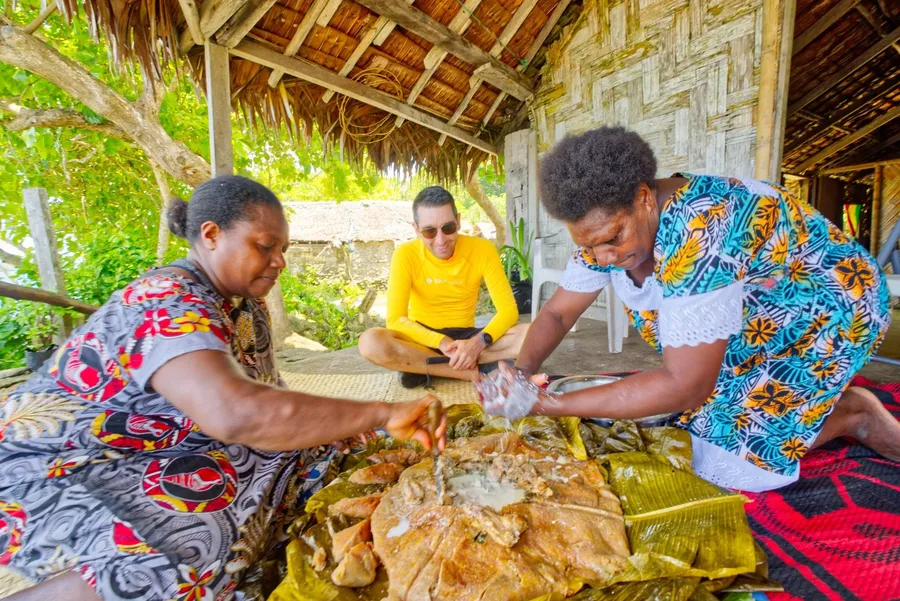
No list of traditional Ni-Vanuatu foods would be complete without laplap. Often considered Vanuatu’s national dish, laplap is made with grated root crops such as cassava, taro or yam, then cooked with coconut milk and often served with fish, vegetables or island cabbage.
Different islands have different ways of preparing it. In Efate and Santo, meat is scattered around the laplap, while in Malekula, the meat is cooked in the centre of the dish.
This is not always something you’ll find on standard restaurant menus, so it’s worth seeking it out through markets, local accommodation meals and hands-on cooking experiences. Better yet, try it somewhere where you can see how it’s made.
Where to Try: Port Vila Central Market (Kumul Highway, Port Vila), Lakatoro Palm Lodge (Lakatoro, Malekula) and Nawori Sea View Bungalow (Walo, Malekula) and more.
4.Nangai Nuts
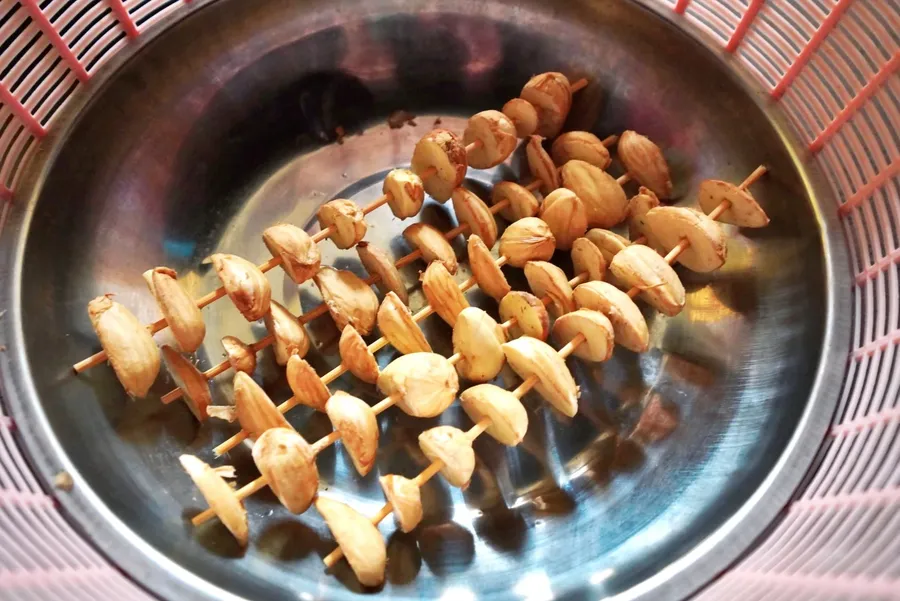
For a simple local snack, look out for nangai nuts. These native Vanuatu nuts are often roasted or boiled, then served on skewers as an easy bite to eat on the go. They have a lightly sweet, crunchy texture, making them a humble but delicious treat between meals.
You’ll often find nangai nuts at local markets and sometimes as wos-em mout snacks at nakamals, where small bites are eaten after drinking kava to “wash your mouth” of its earthy aftertaste.
Where to Try: Port Vila Central Market (Port Vila), Luganville Market (Luganville), Lakatoro Market (Malekula) and wos-em mout snacks at nakamals around Vanuatu.
Editor's Choice
Santo Firewalks and Cultural Tours
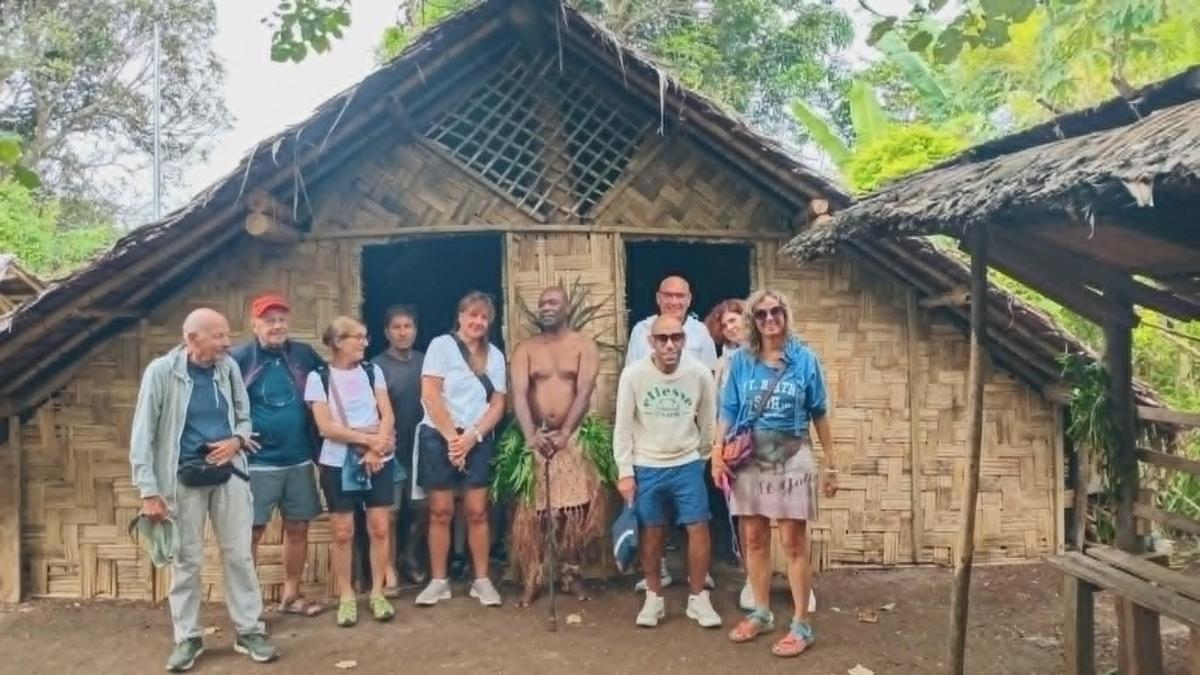
Experience the heart of Vanuatu's living culture with this immersive half-day experience hosted by Chief Bule. From sand drawings and kava tasting to bamboo cooking, weaving and the electrifying...
5.Kava
-%20BNCC%20CREDIT%20VanuatuPocketGuide.com-900x600.webp?v=2026-03-07T23%3A57%3A59.058Z)
Ok, so this one is a drink rather than a food, but you can’t talk about traditional Ni-Vanuatu flavours without mentioning kava. Made from the root of the kava plant, this earthy, muddy-looking drink is valued for its soothing effects, but even more so for its social role.
Kava has been consumed in Vanuatu for centuries, with roots in ancient tribal practices. Traditionally, it was reserved for chiefs and significant ceremonies, while today it remains a symbol of respect, tradition and unity. Kava ceremonies still mark important moments, from weddings and funerals to community gatherings, political meetings, harvest celebrations and welcoming visitors.
What makes Vanuatu’s kava stand out from many other Pacific islands is that it’s typically prepared fresh from fresh root, rather than dried powder, which helps give it its famously potent kick. Most nakamals, or kava bars, spend the day preparing their batch before opening around 3 pm or 4 pm, when the kava is fresh and at its best. Look for coloured lights outside buildings to identify a nakamal, and when the light switches off, they’re usually out of kava for the day.
The etiquette is part of the experience: drink over the designated tap or draining area, pour a little kava to the ground as a gesture to the earth and follow up with wos-em mout snacks to help with the earthy aftertaste. Start small, as strength varies, and stick to recommended places for your first shell.
Where to Try: 5 Sel Kava Bar (Port Vila), Canal View Nakamal (Luganville, Santo), Yumi Kava Bar (Luganville, Santo), Leweton Cultural Village (Luganville, Santo), Santo Fire Walks (Luganville, Santo), Ekasup Cultural Village (Port Vila), Dany Island (East Coast, Santo) and more nakamals, as listed in the 10 Best Kava Bars (Nakamals) in Vanuatu.
6.Wos-em Mout (Wash Your Mouth)
%20CREDIT%20VanuatuPocketGuide.com-900x601.webp?v=2026-03-08T00%3A18%3A35.003Z)
Speaking of kava, after drinking its earthy flavour, it’s customary to cleanse your palate with something salty, spicy or savoury. This is known locally as wos-em mout, or “wash your mouth”, and it’s part of the full nakamal experience.
The idea is simple: kava has a strong flavour (and sometimes a bit of texture, we're not going to lie), so a snack helps balance the taste afterwards. Depending on the nakamal, you might find fresh fruit, cassava chips, grilled meat skewers, roasted nangai nuts or other small bites ready to follow your shell.
It’s not a formal dish, but it is a very Ni-Vanuatu food ritual. Trying wos-em mout gives you another small taste of local social life, especially in the relaxed evening atmosphere of a nakamal.
Where to Try: 5 Sel Kava Bar (Port Vila), Canal View Nakamal (Luganville, Santo), Yumi Kava Bar (Luganville, Santo) and more nakamals, as listed in the 10 Best Kava Bars (Nakamals) in Vanuatu.
7.Mara
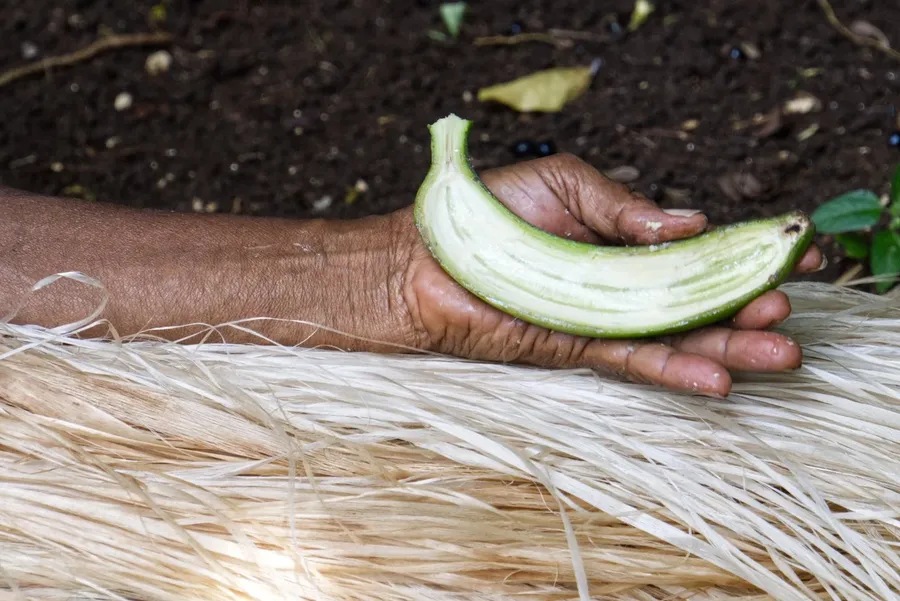
For one of Vanuatu’s more unusual traditional foods, look out for mara. This ancient preservation technique was developed on Futuna Island and uses unripe bananas, which are carefully drained, buried and left to preserve for an extraordinarily long time.
The result is a delicacy that can keep for more than two years, with a texture sometimes compared to cheese and a flavour that might surprise you: think along the lines of blue cheese, but made from banana.
This is not something you’ll find at everyday restaurants, so a cultural visit is your best bet for trying or learning about it.
Where to Try: Jiarofa Cultural Village (Teouma, Efate) - learn more about Jiarofa at the 10 Best Cultural & Kastom Villages in Vanuatu.
8.Fresh Fruit
%20CREDIT%20VanuatuPocketGuide.com.webp?v=2026-03-07T23%3A07%3A55.608Z)
Whether it's for breakfast at your hotel/bungalow or picked up from the market, fresh tropical fruit is in abundance and is a food that is well worth trying in Vanuatu!
From the sweetest pineapples you ever did taste to the smoothest papayas, there's plenty to excite the senses!
Some to try include papaya (popo), banana (banana), pineapple (paenapol), breadfruit (bredfrut), mango (mango), avocado (avokado) and, yes, it’s actually a fruit, coconut (kokonas).
Where to try: For breakfast at just about every accommodation that provides breakfast in Vanuatu. Roadside fruit stalls in north Malekula and east coast Santo. Port Vila Central Market (Port Vila), Luganville Market (Luganville, Santo), Lakatoro Market (Lakatoro, Malekula). Fruit is also included on many guided tours, such as Vanuatu Eco Tours (Port Vila), Tuffuntari Waterfall & Tours (Santo), Serah Botanical Garden (Santo), M Garden (Luganville, Santo) and more.
Editor's Choice
Moso Dream Eco Tours & Transfers
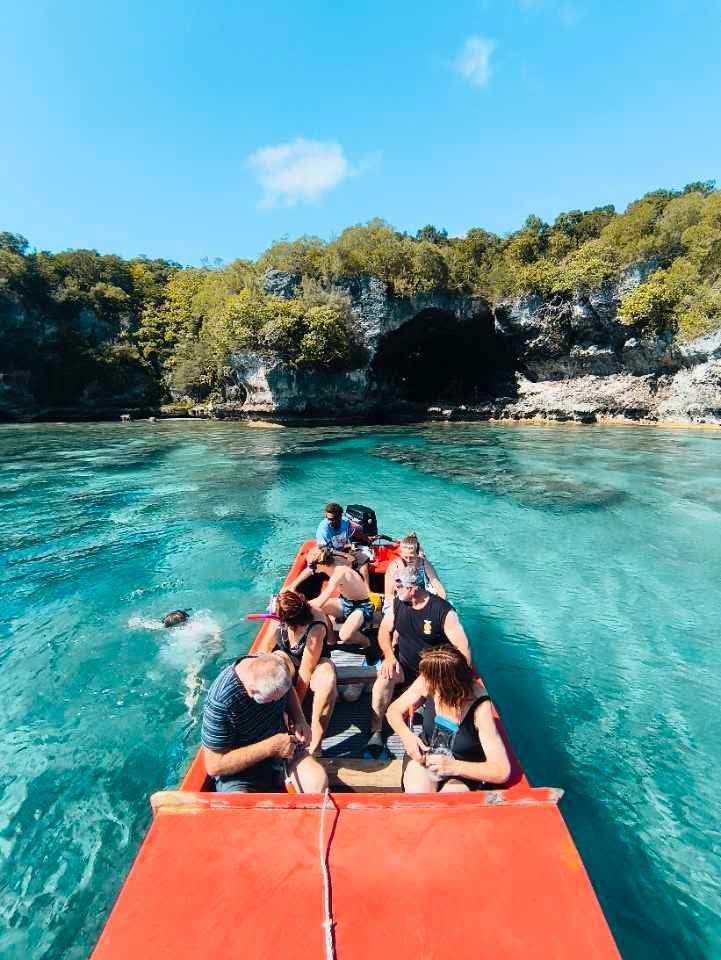
Escape Port Vila for a full day of adventure on beautiful Moso Island with Moso Dream Eco Tours and Transfers. Snorkel above colourful corals, come face to face with giant clams, explore a hidden...
9.Yam, Taro, Breadfruit and More
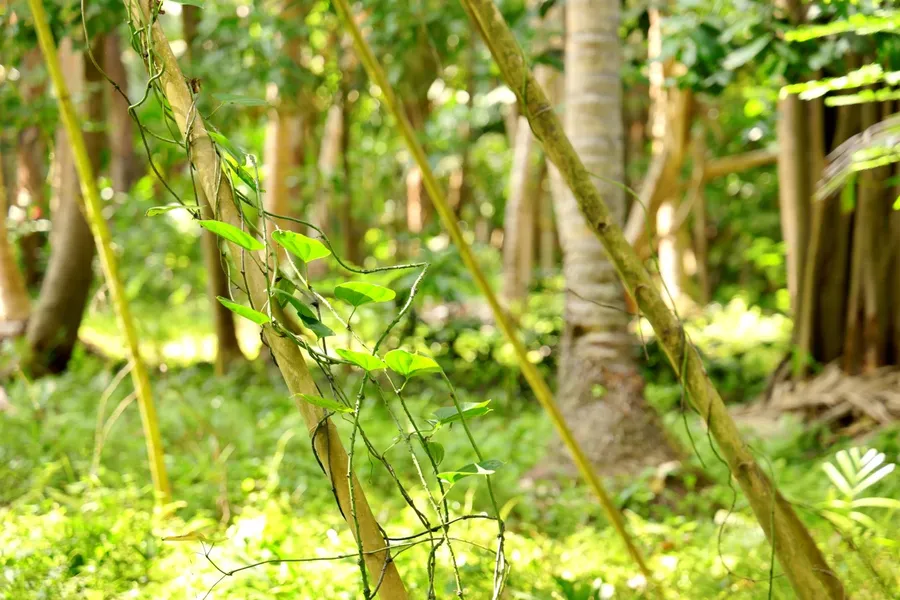
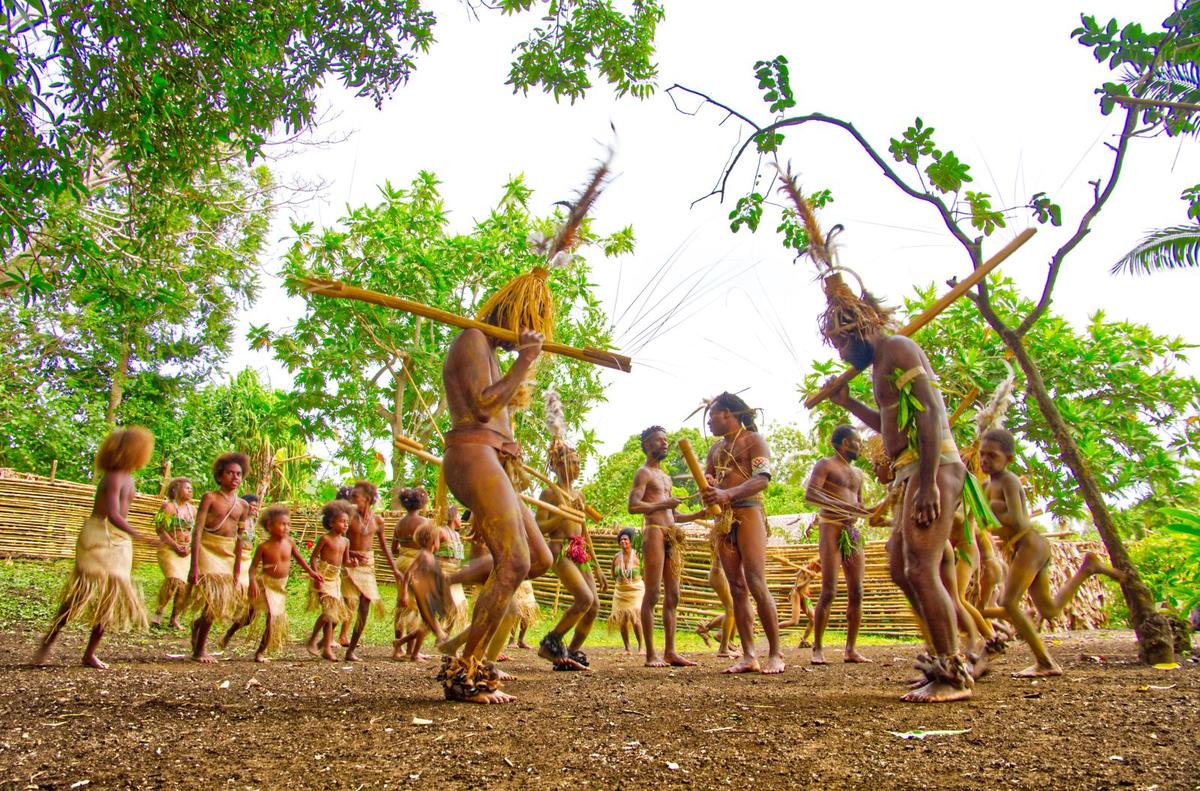
The starchy staples of Vanuatu are well worth trying while you’re here, especially because they are so closely tied to everyday island life. Think yams, taro, cassava, breadfruit, green banana, island cabbage and sweet potato, also known as kumala.
Yam deserves special mention. It is one of Vanuatu’s most important traditional crops, and the yam harvest is closely linked with cultural ceremonies in parts of the country. On Pentecost, for example, the famous naghol land diving season is connected with the yam harvest, making this humble root crop much more than just something on the side of the plate.
You’ll often find these staples boiled, roasted, cooked in coconut milk, served with fish or meat, or grated into traditional dishes like laplap and tuluk. They might not always look flashy, but they are the foundation of many local meals.
Where to Try: Port Vila Central Market (Port Vila), Luganville Market (Luganville, Santo), Lakatoro Market (Lakatoro, Malekula), accommodation meals on the outer islands, roadside fruit stalls in north Malekula and east coast Santo, and more.
10.Seafood and Coconut Crab
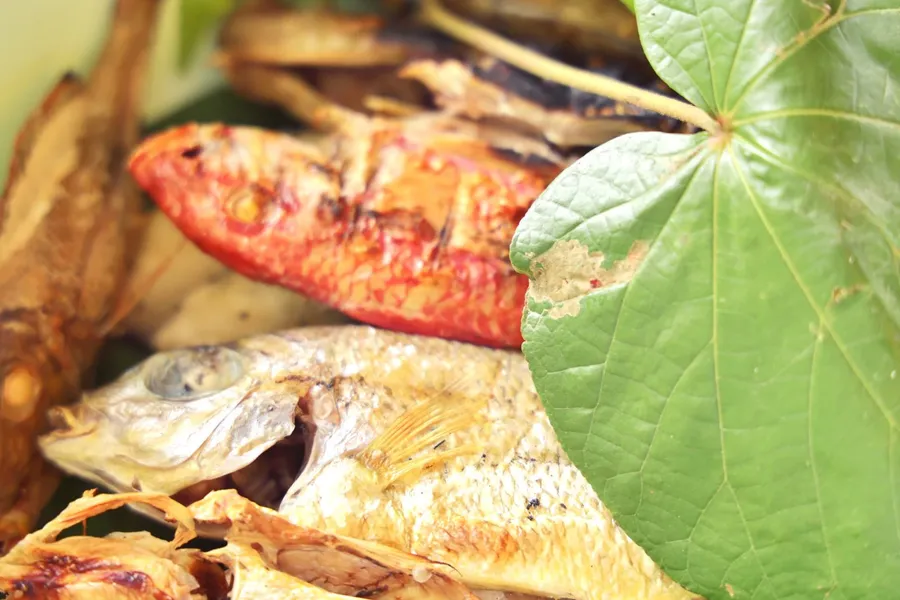
Seafood has long been an important part of eating in Vanuatu, from reef fish caught for local meals to fresh seafood served at restaurants, markets and island bungalows. Trying fish in whatever form you prefer, whether grilled, cooked in coconut sauce, served with rice and greens or enjoyed after a fishing trip, is a must while you’re here.
One seafood delicacy you may hear about is coconut crab, the world’s largest land-dwelling arthropod. It is naturally found in parts of Vanuatu, including the Banks Islands, islands around Efate and Tanna, and has traditionally been a prized food. However, coconut crabs take a long time to grow and are vulnerable to over-harvesting, so sustainable sourcing matters.
For that reason, this is not something we personally encourage travellers to order casually. Many outer islands, especially in the Banks group, use customary conservation, or tabu, periods to protect coconut crabs from commercial depletion. If you do come across it, ask where it has come from and respect local conservation rules.
Where to Try: Fresh fish at markets, island bungalows and restaurants around Vanuatu, fishing charters around Efate and Santo, and coconut crab at places such as LaLaLa Restaurant & Bar (Port Vila), Rossi Restaurant (Port Vila) and Dany Island (East Coast, Santo).
More About Vanuatu Food
That's it for our list of traditional Vanuatu food, dishes, meals and desserts to try! Explore more gastronomical experiences through the following guides:
- 20 Best Foodie Experiences in Vanuatu
- The Best Places to Eat in Vanuatu: 20 Best Restaurants in Vanuatu
- The Top Cheap Eats in Vanuatu
Finally, plan a trip around the islands with food in mind using The Food Guide to Vanuatu: Places to Eat & Food Tours.

%20CREDIT%20VanuatuPocketGuide.com-900x507.webp?v=2026-03-07T23%3A05%3A23.408Z)